The Life of Mozart
In thirty-five years, Wolfgang Amadeus Mozart composed over 600 works across every musical form of his era — an achievement so vast and so perfectly crafted that two centuries of composers have lived in its shadow.
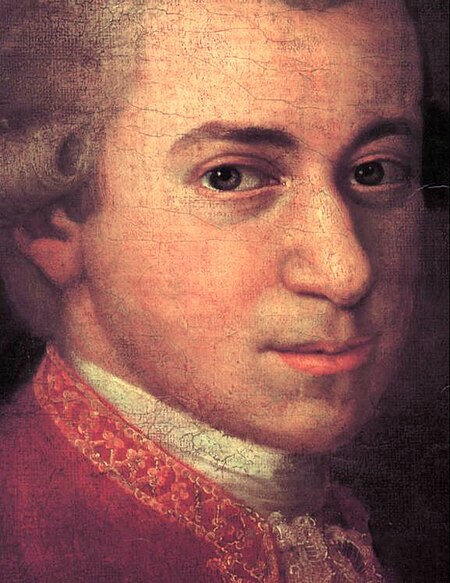
The Prodigy of Salzburg
Mozart was born on 27 January 1756 in Salzburg, then part of the Holy Roman Empire, to Leopold Mozart — a violinist and composer in the service of the Prince-Archbishop — and Anna Maria Pertl. He was the seventh and last child, and only the second to survive infancy.
His father recognised the extraordinary talent almost immediately. By age three, Mozart was picking out harmonies on the keyboard. By five, he was composing — short pieces that Leopold wrote down for him. By six, he performed before the Archbishop of Salzburg. The infant prodigy was, by any measure, the most remarkable natural musical gift the world has ever seen.
```The Grand Tours
From 1762, Leopold organised a series of European tours to display his children's gifts. Mozart and his elder sister Nannerl — herself a superb keyboard player — performed before Empress Maria Theresa in Vienna, before Louis XV at Versailles, before King George III in London, and before audiences across Germany, Holland, and Italy. In London, the young Mozart encountered Johann Christian Bach, whose graceful, singing melodic style would shape his own.
The tours were gruelling — months of travel in uncomfortable carriages, often in poor weather, with a father who was simultaneously devoted and exploitative. Mozart contracted several serious illnesses on tour. But they gave him an encyclopaedic knowledge of European musical styles, an experience that no formal education could replicate.
Italy and the Making of a Composer
Three Italian tours between 1769 and 1773 completed Mozart's musical education. In Rome, he famously heard the Miserere of Allegri — a work the Vatican kept secret — and wrote it down from memory after a single hearing. In Milan, he composed his first mature operas for the Carnival season. The Italian experience gave him the operatic instinct — the sensitivity to dramatic pacing, vocal colour, and the relationship between words and music — that would produce Don Giovanni, Figaro, and The Magic Flute.
Vienna — The Free Artist
In 1781, Mozart made the most consequential decision of his life: he broke with the Archbishop of Salzburg — literally, according to legend, with a kick to his backside from the Archbishop's steward — and moved to Vienna as a freelance musician. It was an audacious, almost reckless, act. No major composer of the period had attempted to live entirely from public subscription concerts, publishing, and commissions without a permanent court appointment.
For a few years it worked brilliantly. His subscription concerts were packed; his Piano Concertos — composed for his own performance — were hailed as wonders; the opera Die Entführung aus dem Serail was a triumph. In 1782 he married Constanze Weber, against his father's wishes. The couple had six children, of whom only two survived infancy.
The Final Years
From around 1787, Mozart's financial position deteriorated. The Viennese public's taste shifted; his subscription concerts drew smaller audiences; his gambling debts grew. He wrote desperate letters to his fellow Freemason Michael Puchberg begging for loans. Yet his compositional output in these final years was the most remarkable of his life: the last three symphonies, the three great da Ponte operas, the Clarinet Concerto, the String Quintets.
He died on 5 December 1791, aged thirty-five, leaving the Requiem unfinished. The cause — disputed for two centuries — was probably rheumatic fever. He was buried in a common grave at St Marx Cemetery, Vienna, in the customary manner of his time. The grave's exact location was never marked, and is now unknown.