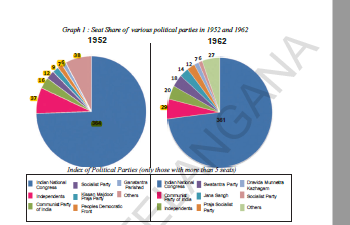
Graph 1 : Seat Share of various political parties in 1952 and 1962
It was therefore not an undemocratic situation marked by the absence of other political parties. It was that other parties contested but were not able to win enough seats to challenge the Congress. However other political parties gradually built themselves and within a couple of decades became strong contenders for power. This period, to a large extent helped nurture democracy in its early years allowing the establishment of a multi-party system based on free and open competition.
It was the strength of the Constitutional framework and the democratic foundations laid by the freedom movement which enabled Indian politics to develop a multiparty democracy. Ruling parties have often acted in a partisan manner to silence the opposition and prevent multiparty democracy from striking roots.
India’s experience, was therefore, very different from that of other colonial countries which got freedom around the same time like Indonesia, Pakistan, China, Nigeria and so on. Demand for State ReorganisationAmong the first challenges that the new nation faced was the demand for reorganisation of states on the basis of language. During the British period, the country was divided into Presidencies (Calcutta, Madras and Bombay) and a number